

 Tiếng Việt
Cosmetic ingredients form the foundation of every skincare and haircare product available on the market. From moisturizers, serums, and lotions to shampoos, all cosmetic products are created using a combination of different ingredients. Each component in a cosmetic formulation plays a specific role in delivering skin benefits, ensuring product stability, and providing a pleasant user experience.
Understanding cosmetic ingredients is essential not only for researchers and formulators developing effective products, but also for cosmetic manufacturers who must maintain product quality and ensure adherence to safety standards.
In this article, we will explore what cosmetic ingredients are, the main categories used in cosmetic formulations, and the roles they play in creating effective beauty products.
I. What Are Cosmetic Ingredients?
Cosmetic ingredients are the substances used to create cosmetic and personal care products. These ingredients can originate from natural, synthetic, or semi-synthetic sources and are combined in specific proportions to form a complete cosmetic formulation.
Within a cosmetic formula, each ingredient performs a specific function, such as:
- Delivering skincare or haircare benefits
- Creating the structure and texture of the product
- Maintaining the stability of the formulation during storage and use
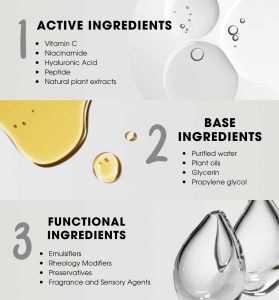
In most formulations, cosmetic ingredients are typically divided into three main groups:
- Active Ingredients – responsible for the primary benefits of the product
- Base Ingredients – provide the structural foundation of the formulation
- Functional Ingredients – improve stability, usability, and product performance
A well-balanced combination of these cosmetic ingredients ultimately determines the quality, effectiveness, and safety of the final product.
II. Main Types of Cosmetic Ingredients
2.1 Active Ingredients
Active ingredients are the components responsible for delivering the main benefits of a cosmetic product. These ingredients determine the product’s effectiveness in skincare or haircare.
Some common active ingredients used in cosmetics include:
- Vitamin C
- Niacinamide
- Hyaluronic Acid
- Peptides
- Natural plant extracts
Among these, natural extracts in cosmetics have gained increasing popularity due to their ability to provide a wide range of beneficial bioactive compounds for the skin.
2.2 Base Ingredients
Base ingredients form the structural foundation of cosmetic products. They also function as carriers that dissolve or disperse active ingredients within the formulation.
Common base ingredients in cosmetics include:
- Purified water
- Plant oils
- Glycerin
- Propylene glycol
These ingredients determine the product’s texture – whether it is thick, lightweight, or fluid – and significantly influence the user experience, including absorption, smoothness, and moisturizing performance.
2.3 Functional Ingredients in Cosmetics
Functional ingredients are components that help improve the stability, usability, and overall performance of cosmetic formulations. While they may not provide the primary skincare benefits, they play an essential role in maintaining product quality.
Typical functional ingredients include:
- Emulsifiers that help blend oil and water phases
- Rheology modifiers that adjust product texture and viscosity
- Preservatives that prevent microbial growth
- Fragrance and sensory agents that enhance product appeal
Thanks to these functional ingredients, cosmetic products can maintain consistent quality throughout their shelf life and during everyday use.
 Main Types of Cosmetic Ingredients
III. Natural Extracts in Cosmetic Ingredients
In recent years, natural cosmetic ingredients have become a major trend in the global beauty industry. Consumers are increasingly interested in skincare products made with plant-based ingredients that are gentle and skin-friendly.
Natural extracts are bioactive compounds obtained from herbs, botanicals, or plant materials. These extracts often contain beneficial compounds such as:
- Polyphenols
- Flavonoids
- Vitamins
- Antioxidants
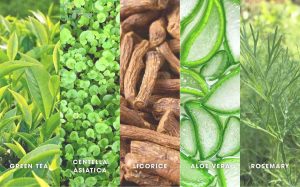
Some commonly used natural extracts in cosmetics include:
Commonly used natural extracts in cosmetics
These ingredients can provide multiple skin benefits, such as:
- Soothing irritated skin
- Providing antioxidant protection
- Improving skin hydration
- Supporting skin recovery and repair
IV. Why the Quality of Cosmetic Ingredients Matters
The quality of cosmetic ingredients directly affects both the effectiveness and safety of cosmetic products. Even the most advanced formulation cannot perform well if the raw materials do not meet quality standards.
High-quality cosmetic ingredients should meet the following criteria:
- Clear and traceable origin
- Stable active compound concentration
- High purity levels
- Standardized manufacturing processes
If ingredient quality is not properly controlled, cosmetic products may face several issues, including:
- Reduced skincare effectiveness
- Poor formulation stability
- Increased risk of skin irritation for users
Therefore, choosing a reliable and reputable supplier of cosmetic ingredients is a critical step in cosmetic research, development, and manufacturing.
Conclusion
Cosmetic ingredients are the foundation of every cosmetic formulation. Understanding the various types of ingredients and their roles helps improve the efficiency of product research, development, and manufacturing.
In addition, natural extracts in cosmetics are gaining popularity due to their rich bioactive compounds and compatibility with the growing trend of safe, green, and sustainable beauty products.
Selecting the right ingredients not only enhances product performance but also ensures the quality and safety of the product for consumers.
If you would like to learn more about cosmetic ingredients, natural extracts, and cosmetic formulation development, explore more expert insights at nacos.vn.
